

|
Petunias
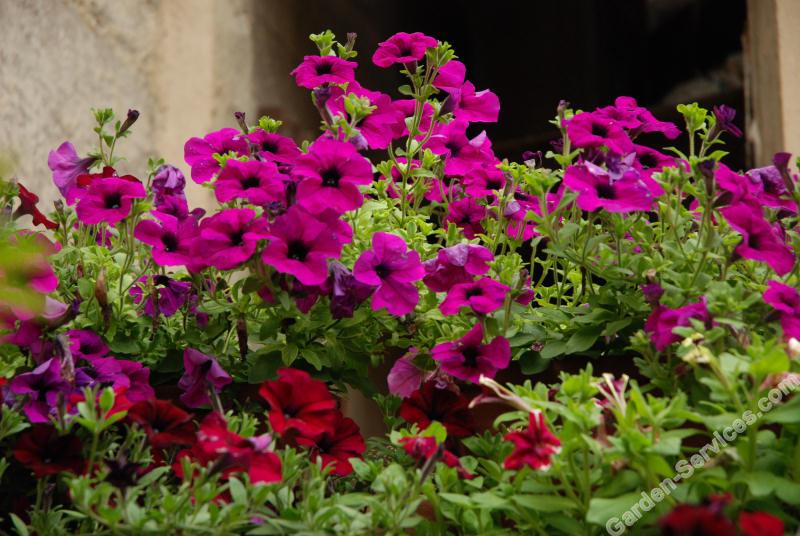
From large, sweeping landscape beds to a few pots on a balcony, petunias reliably provide a long blooming season. These durable annuals, available in almost every color imaginable, can be used in a variety of ways to enhance any garden or terrace.Several types of petunias are available, and it's important to choose the right ones for your garden. Grandifloras grow from eight to twelve inches high and have large, wavy-edged blossoms that may be single or double. Multifloras have smaller, single blooms, but their habit of growth is more prolific and compact. Millifloras have very small flowers -about one inch across-and a compact habit of growth. Cascade types can have single or double flowers, but spread to about eighteen inches. These petunias are best suited for hanging baskets and window boxes.
Petunias prefer full sun and well-drained soil, but they also perform well in partial shade. They can tolerate drier soils and will actually get "leggy" if given too much water. They're equally at home when used as container plants or bedding plants. If you want them to continue to bloom prolifically and look compact, it's a good practice to remove dead flowers and periodically trim back the plants a few inches.
One of the most common pests of petunias is the budworm caterpillar. These small green worms appear in late June and July. You won't often see the worm itself. Instead, you'll see the droppings, which often are described as small black seeds. The worms feed on the flower buds, making small holes in the buds and the leaves.
These caterpillars are difficult to control but Dipel, Thuricide, Talstar and Scimitar are reasonably effective insecticides. Sevin and Diazinon aren't effective, because budworms have become resistant to them. If left unchecked, the presence of the caterpillars will cause petunias to stop blooming.
Adapted from an article

Sources