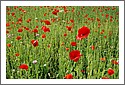
Oriental poppies add old-fashioned charm to gardens. These plants usually are easy to grow, but they prefer sunny areas and soil that's well drained. The plants are hardy, and do well in mountain gardens at high elevations.
Poppies decline rapidly in poorly drained soils. It's not a good idea to plant oriental poppies in areas where soil stays wet for extended periods.
The silky, bowl-shaped flowers appear in late spring and burst from distinctive buds covered in bristly hairs. Flower colors include scarlet red, glowing orange, salmon pink, sparkling white and bi-colored forms. Many of the flowers feature inky-dark blotches at the base of the petals and colorful stamens in the center. As petals fall, the remaining seed pod adds interest and contrast in gardens.
Careful placement of oriental poppy is essential. Its foliage dies back during the hot weeks of mid-summer, leaving a conspicuous gap. A well-chosen companion plant such as baby's breath or whirling butterflies can help camouflage the open space.
As temperatures cool down in September, new foliage emerges from the crown and persists through the winter. Oriental poppy may be left undisturbed indefinitely. The clumps will become large, but they generally aren't invasive.
Related plants include Iceland poppy, a perennial that generally lives
for 2 to 3 years. Like oriental poppy, it prefers higher elevations and
cool temperatures. Opium poppy, another short-lived plant, will re-seed
freely once established in a garden - beware, however: it is illegal to
grow in some regions.
Adapted
from: Colorado State University Cooperative Extension
Sources,
Credits and Copyright